Garage Door Won’t Open? We’ll Fix It Today.
Stuck inside or locked out? POCO Garage Doors provides same-day emergency garage door repair across Coquitlam, Port Coquitlam, Port Moody, Anmore, Belcarra and Burnaby. Our trucks are stocked with broken torsion springs, replacement cables, rollers and drums — so most calls are diagnosed and fixed in one visit.
Emergency Diagnostic & Repair
- Same-day, evenings & weekends
- Most repairs completed in 1–2 hours
- Springs, cables, drums & rollers in-stock
- Up-front pricing before any work starts
- 1-year parts & labour warranty
4 Things Almost Always Cause a Garage Door That Won’t Open
If your garage door won’t open, the opener hums but the door won’t budge, or it goes up a few inches and stops, the cause is almost always mechanical — not electrical. After 20+ years repairing garage doors across the Tri-Cities, here are the four problems we see on nearly every emergency call — in order of how often they happen.
What Tri-Cities Homeowners Search When This Happens:
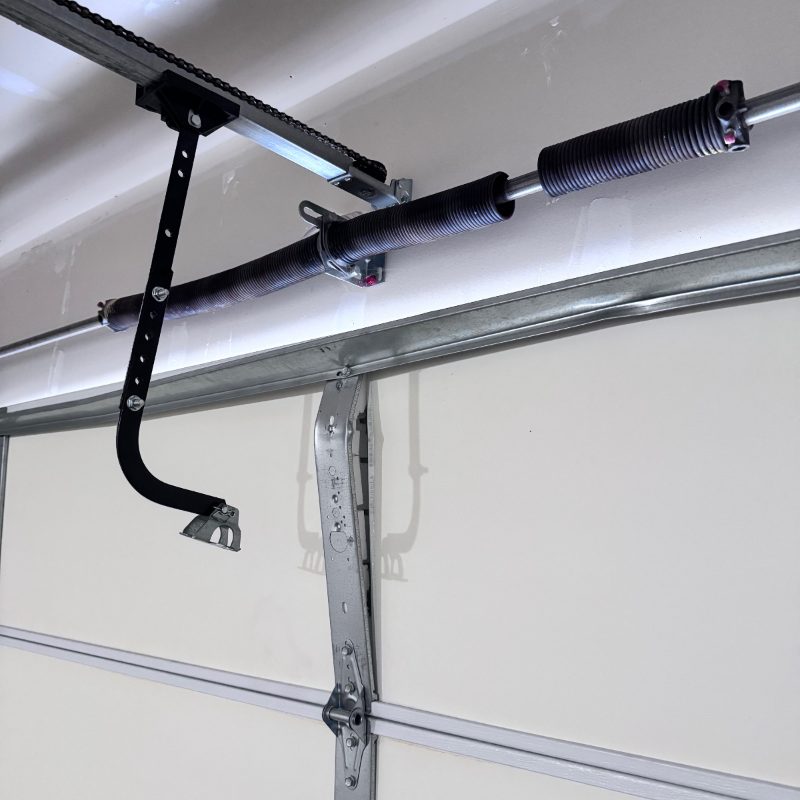 Cause #1 • Broken Torsion Spring
Broken Torsion Spring
This is the #1 reason a garage door won’t open — we see it on roughly 6 out of every 10 emergency calls. The torsion spring above your door does all the heavy lifting. When it snaps (usually with a loud bang that sounds like a gunshot), your opener can’t lift the door — it’s simply not strong enough on its own.
Tell-tale signs your spring is broken:
- You heard a loud bang from the garage — sometimes hours or days before the door stopped working
- Opener motor runs and the chain moves, but the door doesn’t lift
- You can see a visible 2–3 inch gap in the spring above the door
- Door feels extremely heavy if you try to lift it manually (a balanced door should weigh ~10 lb to lift)
- Door opens 6–12 inches then stops or reverses
Do not try to operate the opener repeatedly — it will burn out the motor or strip the gear. Disconnect the opener using the red emergency release cord and call us. We carry every common torsion spring on the truck and most repairs are completed the same day from $269.
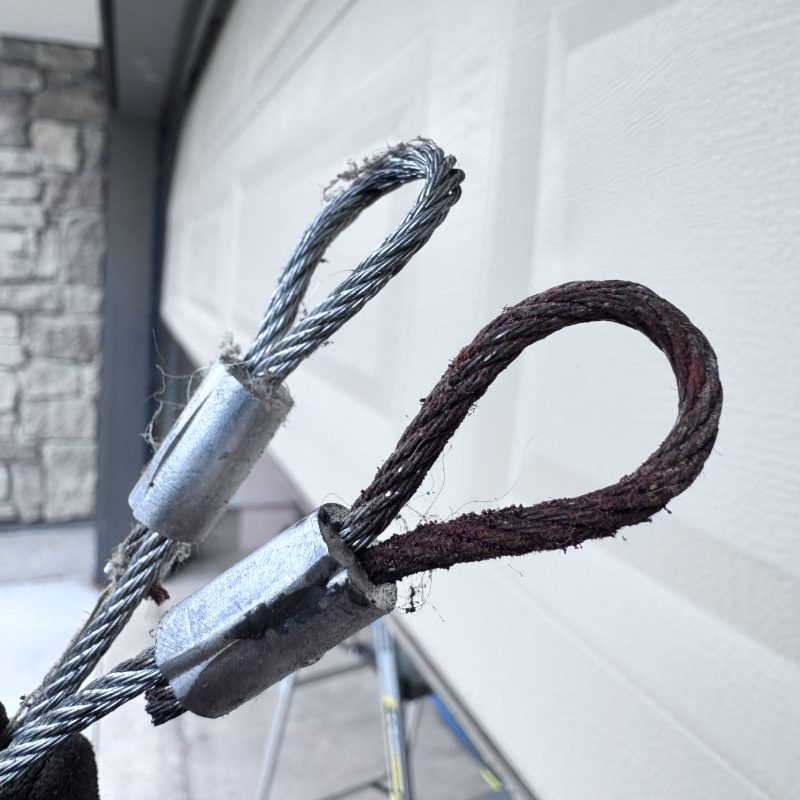 Cause #2 • Broken / Frayed Cable
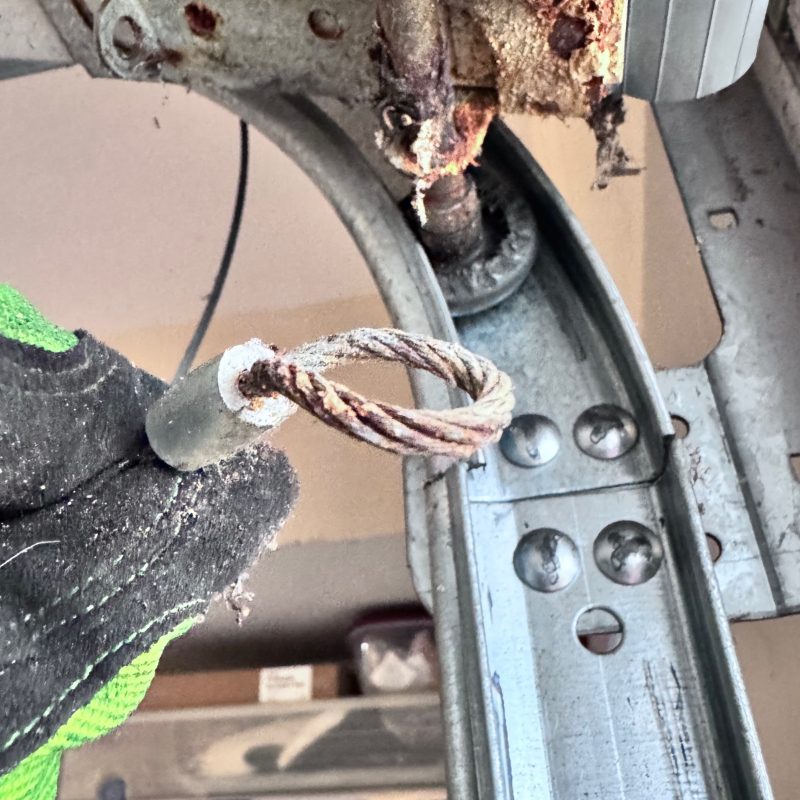
Broken or Frayed Garage Door Cable
Garage door lift cables run from the bottom corner brackets up to the cable drums on the torsion shaft. They work in tandem with the springs to lift the weight of the door. When a cable frays, rusts, or snaps, the door becomes unbalanced and won’t open evenly — or won’t open at all.
How to know it’s a cable problem:
- Door is crooked — one side is higher than the other
- You can see a frayed, rusted, or snapped cable hanging loose at the bottom corner
- Door opens at an angle and binds in the tracks
- Loud popping or scraping sound when the opener runs
- Cable looks unwound or piled up at the bottom of the track
A door with one broken cable is dangerous — the remaining cable and spring are now carrying double the load and can fail at any moment. Stop using the door immediately. Cables should always be replaced in pairs — if one snapped, the other has the same age and wear and is next.
Rust Is the Silent Cable Killer
Coastal BC humidity rusts the steel strands inside garage door cables from the inside out. By the time you can see the rust, the cable has already lost most of its strength. If you can see any rust, fraying, or kinks in your cables — even if the door still works — replace them now. A cable that snaps under tension can put a 200–400 lb door on the ground in less than a second.
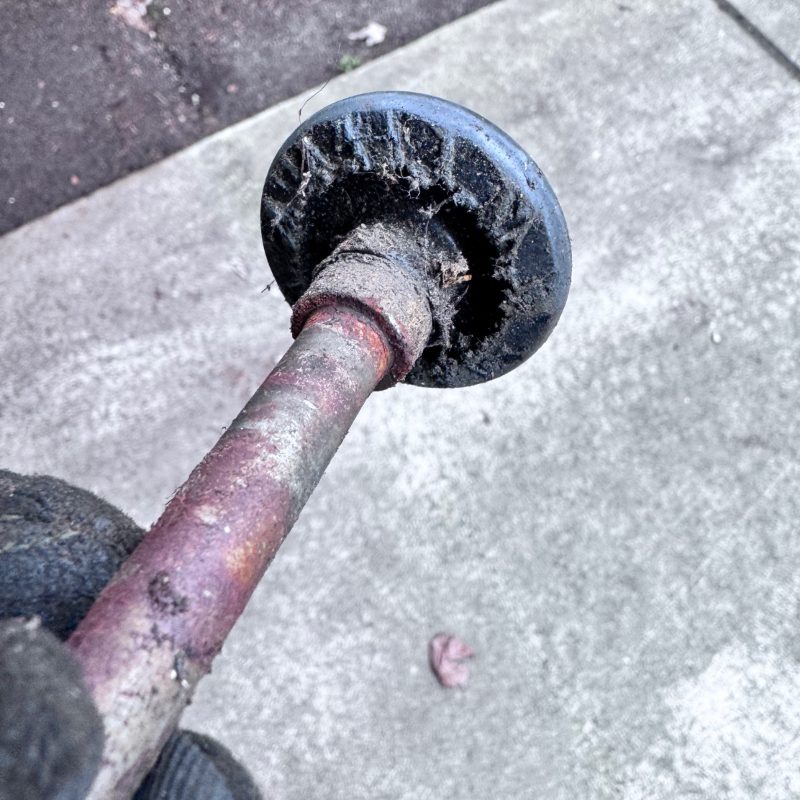 Cause #3 • Jammed / Worn Rollers
Jammed, Stuck or Worn-Out Rollers
Your door rides on 10–12 small rollers that travel inside the metal tracks. Most builder-grade doors come with cheap plastic rollers with no bearings — they wear out in 5–7 years, dry out, seize up, and grind to a halt inside the track.
Signs of bad rollers:
- Door is extremely loud — grinding, scraping, or rattling when it moves
- Door jams or sticks part-way up or down
- You can see flat spots, cracked plastic, or a missing wheel on the rollers
- Door shudders or vibrates when opening
- Rollers are visibly off the track or hanging crooked
Forcing the opener to push past a jammed roller bends the tracks, breaks hinges, and burns out the motor. We replace all 10–12 rollers with 13-ball nylon bearing rollers — quieter, smoother, and rated for 100,000+ cycles. The whole upgrade typically takes under an hour.
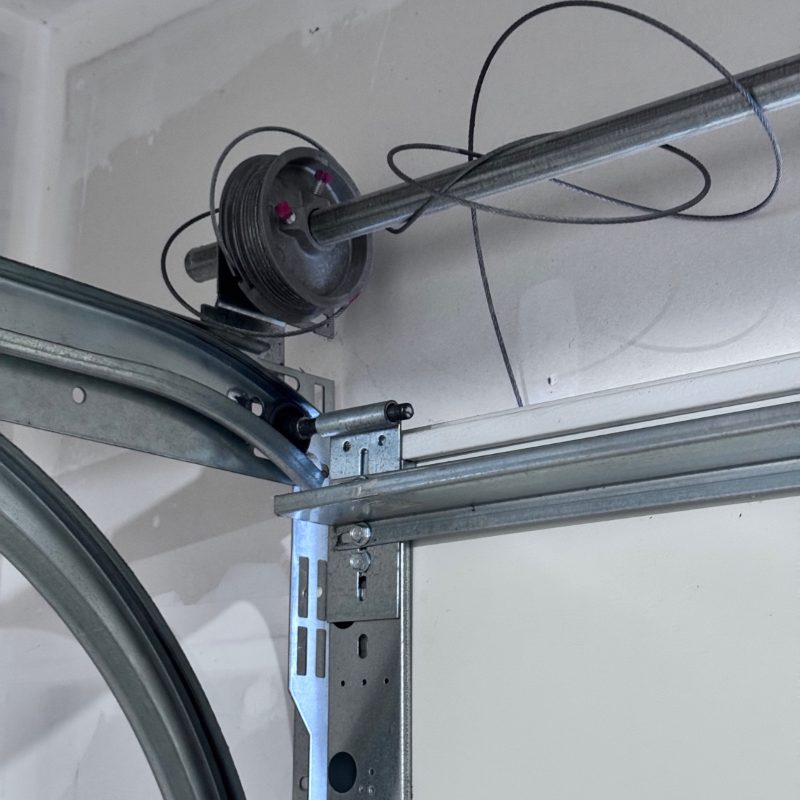 Cause #4 • Cable Off the Drum
Cable Came Off the Drum & Wrapped on the Shaft
When a door closes onto an obstruction (a garbage bin, a kid’s toy, an uneven floor) the cable goes slack and slips off the cable drum. The next time you hit the opener, the cable wraps itself around the torsion shaft like fishing line on a reel — and now the door is jammed, crooked, and won’t open.
You probably have this problem if:
- Door tilts heavily to one side when you try to open it
- You can see cable wrapped “birds-nest” style around the shaft above the door
- Drum is loose or visibly empty of cable
- Door scrapes the floor on one corner when closing
- Started after the door closed onto something
This is not a DIY repair. The torsion shaft is under live spring tension — loosening the wrong set screw with the door in this position can release that tension violently. We unwind the spring safely, re-seat the cable on the drum, re-tension, and re-balance the door. Most jobs are done in under 90 minutes.
What Most Repairs Cost
Every quote is given before any work starts. No upsells, no surprises. Final price depends on the size of your door, spring type, and parts needed.
From Phone Call to Working Door — Usually Same Day
Call or Text Us
Describe what happened. We’ll often diagnose the cause over the phone in 60 seconds.
Same-Day Arrival
Most Tri-Cities calls reach your door within 2–4 hours. Evenings and weekends available.
Up-Front Quote
We diagnose, show you the broken part, and quote a final price before starting work.
Repair & Test
Most repairs done in 1–2 hours. We balance, lubricate, and safety-test the whole door before we leave.
 Prevention • Annual Tune-Up
90% of These Emergencies Are Preventable
Almost every emergency call we run could have been caught months earlier with a $149 annual tune-up. Springs, cables, rollers, and drums all give clear warning signs before they fail — rust spots, fraying strands, surface pitting, dry bearings, slack tension. A trained technician spots them in 20 minutes.
An annual maintenance visit catches:
- Rusted, frayed, or stretching cables before they snap
- Springs nearing the end of their cycle life
- Worn-out rollers before they jam the door
- Loose hardware, hinges, and brackets
- Worn drum bearings and end bearing plates
- Misaligned tracks and weak opener safety reverse
Most homeowners save 5–10× the tune-up cost over 5 years by catching these things early. Ask us about it on your next service call — or book a tune-up now.
Please Don’t DIY a Stuck Door
Torsion springs hold 200–400 lb of stored energy. Cables under tension can whip with enough force to break bone. Cable drums and torsion shafts require specialized winding bars to release safely. Every year people are seriously injured trying to fix a stuck garage door themselves — including loss of fingers, eyes, and worse. Disconnect the opener using the red emergency release cord, leave the door alone, and call a licensed technician. We’ll be there same day.
Emergency Garage Door Repair Across the Tri-Cities
POCO Garage Doors is locally owned and operated. We respond fastest in these neighbourhoods — usually within 2–4 hours, often sooner:
Ready to Get Your Door Open?
Call now — most Tri-Cities homes back to working in a single visit.
📞 Call 778-831-0239 Now Request Service Online →